

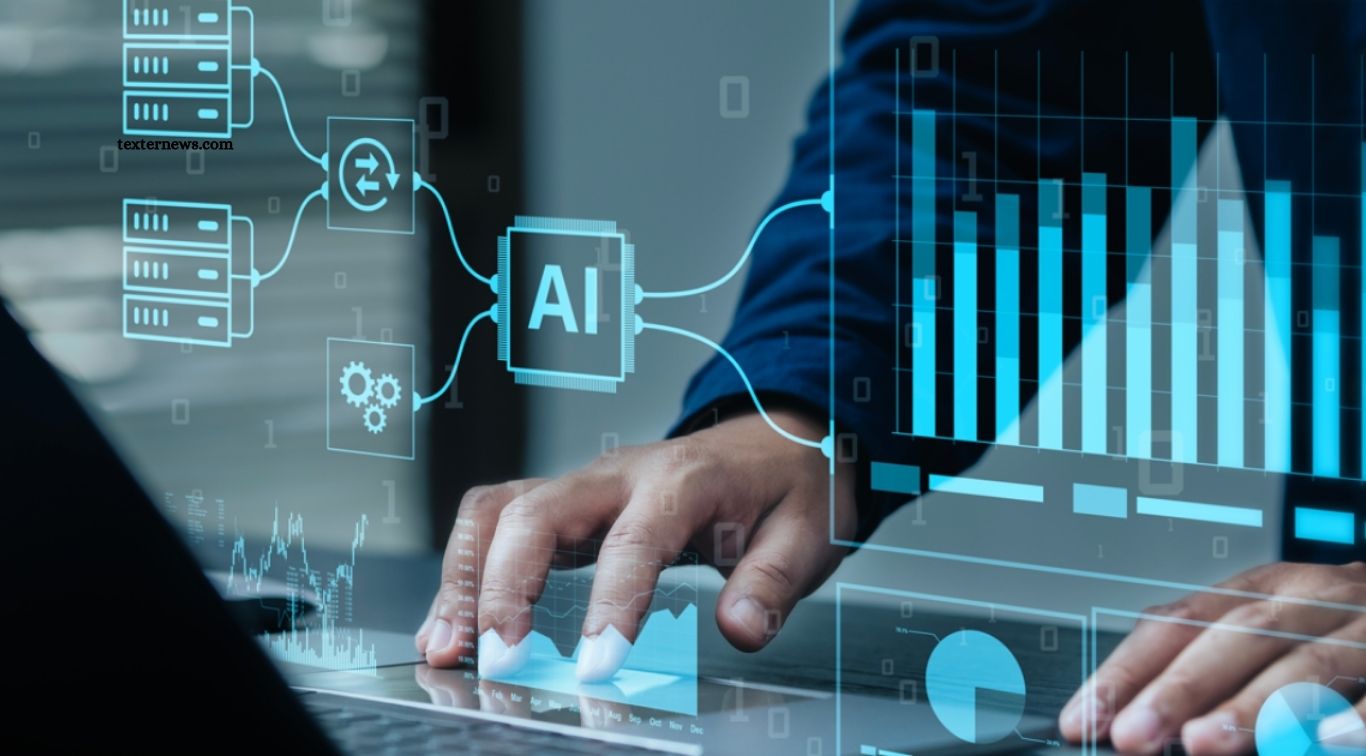
Artificial intelligence is changing business by helping companies automate tasks, analyze information, improve customer experiences, and make faster decisions. From small businesses to large enterprises, AI tools are becoming part of everyday operations across marketing, finance, customer service, human resources, sales, and product development. As these technologies continue to evolve, businesses are finding new ways to use artificial intelligence for efficiency and growth.
The impact of AI goes beyond automation. Artificial intelligence can help organizations identify patterns, personalize customer interactions, generate content, support employees, and improve business processes. Understanding how artificial intelligence is changing business can help entrepreneurs and companies prepare for technological changes while identifying practical opportunities for responsible AI adoption.
Read More: Common Business Mistakes and How to Avoid Them
AI Is Automating Repetitive Tasks
One of the most visible ways artificial intelligence is changing business is through automation. AI-powered systems can handle repetitive activities such as data entry, document processing, scheduling, basic customer inquiries, and routine administrative work. Automating these tasks can reduce manual effort and allow employees to focus on activities that require human judgment and creativity.
Businesses can benefit from automation when it is applied to suitable processes. Before introducing an AI system, companies should understand the task, identify potential errors, and establish appropriate human oversight. Effective automation is not simply about replacing manual work; it is about improving workflows while maintaining quality and accountability.
AI Is Improving Customer Service
Artificial intelligence is transforming customer service through chatbots, virtual assistants, automated responses, and intelligent support systems. These technologies can help businesses respond to common customer questions quickly and provide assistance outside traditional operating hours. AI can also help organize customer inquiries, so support teams can address more complex issues efficiently.
Human involvement remains important for sensitive or complicated customer concerns. AI systems may provide useful initial support, but some situations require empathy, judgment, and personalized communication. Businesses can combine AI-powered tools with human customer service teams to create faster and more responsive support experiences.
AI Is Changing Marketing Strategies
Marketing teams are using artificial intelligence to analyze customer behavior, generate content ideas, personalize communication, and improve campaign planning. AI can process large amounts of marketing data and identify patterns that may be difficult to recognize manually. This can help businesses understand audiences and create more relevant marketing strategies.
AI can support tasks such as audience segmentation, content creation, advertising optimization, and customer journey analysis. However, businesses still need clear brand guidelines and human review to maintain accuracy, originality, and consistency. The strongest marketing strategies can use AI for efficiency while preserving human creativity and strategic thinking.
AI Is Transforming Data Analysis
Businesses generate large amounts of data through sales, websites, customer interactions, financial transactions, and operational systems. Artificial intelligence can analyze large datasets quickly and identify patterns, trends, and relationships. This allows companies to gain useful insights without relying entirely on manual data analysis.
AI-supported analytics can help businesses understand customer behavior, monitor performance, identify unusual activity, and support forecasting. The quality of the results depends heavily on the quality and relevance of the underlying data. Companies should therefore maintain reliable data systems and carefully evaluate AI-generated insights before making important decisions.
AI Is Supporting Business Decisions
Artificial intelligence can provide decision support by analyzing information and identifying potential patterns. Business leaders can use AI systems to compare scenarios, summarize large amounts of information, monitor performance indicators, and explore possible outcomes. This can make certain decision-making processes faster and more data-driven.
AI should generally support rather than completely replace human judgment in important business decisions. Leaders need to consider context, organizational goals, customer expectations, ethical issues, and information that may not be represented in available data. Combining AI analysis with human experience can create a more balanced decision-making process.
AI Is Personalizing Customer Experiences
Customers increasingly expect businesses to provide relevant recommendations and communication. Artificial intelligence can analyze customer interactions, preferences, browsing behavior, and purchasing patterns to help companies personalize experiences. Online retailers, streaming platforms, financial services, and other businesses can use AI to deliver more relevant recommendations and content.
Personalization can improve customer engagement when it is useful and transparent. However, businesses need to handle customer information responsibly and respect applicable privacy requirements. Customers may become uncomfortable when personalization feels excessive or intrusive, so companies should balance convenience with transparency and responsible data practices.
AI Is Changing Human Resources
Human resources departments are using AI for tasks such as organizing applications, answering employee questions, analyzing workforce information, and supporting administrative processes. These tools can reduce repetitive workloads and help HR teams spend more time on employee development, workplace culture, and strategic planning.
AI use in human resources requires careful oversight because employment decisions can significantly affect people. Companies should evaluate systems for accuracy, fairness, privacy, and compliance with relevant requirements. Human review remains important when AI tools are used in recruitment, performance management, or other sensitive workplace processes.
AI Is Improving Financial Management
Artificial intelligence is also changing how businesses manage financial information. AI systems can help analyze transactions, identify unusual patterns, automate financial processes, and support forecasting. These capabilities can help finance teams process information more efficiently and identify potential issues earlier.
Businesses still need strong financial controls and professional oversight when using AI in finance. Automated systems can make mistakes when data is incomplete, inaccurate, or poorly interpreted. Combining AI tools with established accounting procedures and human review can help companies improve efficiency while maintaining financial accuracy.
AI Is Supporting Sales Teams
Sales teams can use artificial intelligence to organize customer information, identify potential leads, personalize communication, and analyze sales performance. AI systems can help sales professionals prioritize opportunities and reduce time spent on repetitive administrative activities.
AI can also support sales forecasting by analyzing historical information and current activity. However, sales relationships often depend on trust, communication, and human understanding. AI tools can assist sales professionals, but personal interaction remains important when customers require detailed explanations, negotiation, or relationship building.
AI Is Changing Product Development
Artificial intelligence can help businesses develop products by analyzing customer feedback, identifying market patterns, and generating ideas. Companies can use AI to explore different concepts, evaluate information, and support testing processes. This can shorten certain stages of product development and provide teams with additional sources of insight.
Human creativity remains important because successful products must solve meaningful customer problems. AI-generated ideas need to be evaluated against practical requirements, customer expectations, costs, and business objectives. Combining technology with human creativity can help companies explore more possibilities without losing focus on real-world needs.
AI Is Helping Small Businesses Compete
Artificial intelligence is not limited to large corporations. Small businesses can use affordable AI tools for content creation, customer support, scheduling, data analysis, marketing, and administrative work. These tools can provide smaller teams with additional capabilities without requiring large internal departments.
Small businesses should focus on practical use cases that solve clear problems. Adopting too many tools at once can create unnecessary complexity and costs. Starting with one manageable process, measuring the results, and expanding gradually can help small businesses gain value while maintaining control over their operations.
AI Is Creating New Business Opportunities
Artificial intelligence is creating opportunities for businesses to develop new products, services, and business models. Companies can build AI-powered software, specialized services, automation solutions, analytics platforms, and industry-specific tools. Traditional businesses can also incorporate AI into existing offerings to provide additional value to customers.
New opportunities require careful market research because technological possibilities do not automatically translate into profitable products. Businesses need to understand customer problems, competition, costs, regulatory considerations, and long-term demand. Successful AI adoption depends on solving real problems rather than using artificial intelligence simply because it is a popular technology.
AI Is Changing Workplace Skills
The growth of artificial intelligence is increasing demand for employees who can work effectively with technology while applying communication, creativity, critical thinking, and problem-solving skills. Some tasks may become automated, while new responsibilities can emerge around managing, evaluating, and improving AI-supported workflows.
Businesses can prepare employees by investing in training and continuous learning. Workers may need to understand how AI systems operate, how to evaluate their outputs, and when human judgment is necessary. Developing both technical and human skills can help organizations adapt to changing workplace requirements.
AI Requires Responsible Data Management
Artificial intelligence depends heavily on data, making data quality and management essential for successful implementation. Businesses need reliable information to produce useful AI outputs. Poor-quality, incomplete, outdated, or improperly collected data can reduce the usefulness of AI systems and create operational problems.
Companies should establish clear practices for collecting, storing, protecting, and using business data. Access controls, security measures, documentation, and appropriate oversight can help reduce risks. Responsible data management is particularly important when AI systems process customer, employee, financial, or other sensitive information.
AI Brings New Business Risks
Although artificial intelligence offers many opportunities, businesses also need to understand its risks. AI systems can produce inaccurate information, reflect problems within training data, expose confidential information, or generate outputs that require additional verification. Overreliance on automated systems can also create operational problems when human oversight is limited.
Businesses can reduce these risks by establishing clear AI policies and review procedures. Employees should understand when AI can be used, what information should not be entered into certain systems, and when outputs require verification. Responsible implementation allows companies to explore AI benefits while maintaining appropriate safeguards.
AI Is Changing Business Competition
As more companies adopt artificial intelligence, technology may influence how businesses compete. Organizations that improve processes, understand customers, and develop useful AI applications may create new efficiencies or services. At the same time, widespread access to AI tools means that technology alone may not provide a lasting competitive advantage.
Businesses can differentiate themselves through strong customer relationships, unique expertise, reliable products, effective execution, and responsible use of technology. AI can support these strengths, but sustainable business performance depends on more than adopting the newest tools. Companies need strategies that connect technology with genuine customer value.
The Future of AI in Business
Artificial intelligence is likely to become more integrated into everyday business operations as tools become more capable and accessible. Companies may increasingly use AI across connected workflows rather than treating it as a separate technology. This could influence how organizations manage information, communicate with customers, develop products, and support employees.
The future of AI in business will also depend on responsible implementation, employee adaptation, customer expectations, and evolving rules. Businesses that approach AI thoughtfully can experiment with new capabilities while maintaining human oversight. Continuous learning and careful evaluation will remain important as technology develops.
Frequently Asked Questions
How is AI changing business?
AI helps businesses automate tasks, analyze data, improve customer service, personalize marketing, and support faster decision-making.
How does AI improve customer service?
AI-powered chatbots and virtual assistants provide quick responses, handle common questions, and support customers outside regular business hours.
Can small businesses use AI?
Yes, small businesses can use AI for marketing, customer support, scheduling, content creation, data analysis, and administrative tasks.
How does AI affect marketing?
AI helps marketers analyze customer behavior, personalize campaigns, generate content ideas, segment audiences, and optimize marketing strategies.
What risks does AI create for businesses?
AI can produce inaccurate information, create privacy concerns, introduce data-related problems, and cause issues when human oversight is limited.
Why is human oversight important with AI?
Human oversight helps verify AI outputs, consider context, protect business interests, and ensure important decisions receive appropriate judgment.
Conclusion
Artificial intelligence is changing business by improving automation, customer service, marketing, data analysis, financial management, sales, human resources, and product development. It can help companies process information faster, reduce repetitive work, personalize experiences, and discover new opportunities. Both large organizations and small businesses can use AI when tools are matched to practical business needs. Successful AI adoption requires more than purchasing new technology.

1 Comment
Pingback: Startup Success Stories That Inspire Entrepreneurs - TexterNews