

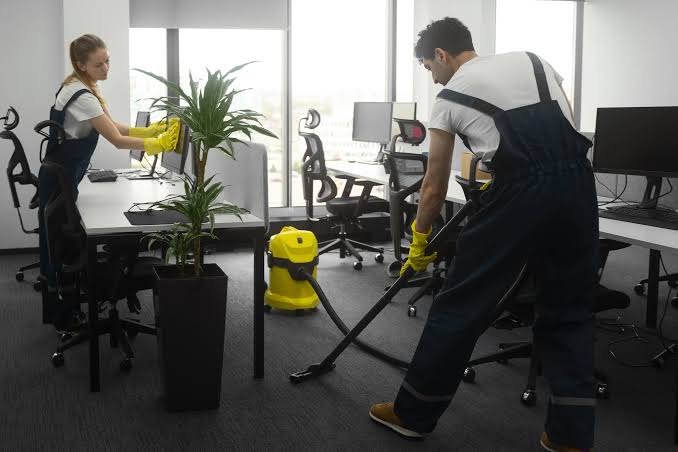
Across Brisbane’s office towers, business parks, schools and retail centres, a quiet change is working through building maintenance schedules. Floor care, long treated as a cosmetic line item handled whenever carpets began to look tired, is increasingly discussed alongside ventilation, filtration and humidity control as part of a broader conversation about indoor environmental quality. Facility managers report that questions once confined to engineering and HVAC teams now land on the desks of cleaning coordinators, and that the answers are reshaping how often carpet is cleaned, by which method, and with what documentation attached.
The shift accumulated rather than arrived. Sustained attention to how buildings handle air, moisture and occupant density has left facilities teams with a habit of scrutiny that outlasted the circumstances that created it. Tenants ask more questions, school administrators field more enquiries from parents, and employers negotiating hybrid attendance find the physical condition of a workplace has become part of the argument for coming in at all. Soft flooring, which covers much of the occupied area in a typical Brisbane tenancy, is no longer easy to treat as background.
Carpet as a Reservoir, Not Just a Surface
The technical case rests on a characteristic understood in the cleaning industry for decades but rarely explained to occupants: carpet acts as a sink. Fibres trap particulate that would otherwise stay airborne or resettle repeatedly from hard surfaces. Skin cells, textile fibres, soil tracked in from footpaths and car parks, pollen, cooking residues, toner dust and the general fallout of an occupied building all accumulate in the pile and the backing beneath it.
Hygienists generally describe this as a double-edged property. A well-maintained carpet holds material out of the breathing zone, a genuine benefit compared with a hard floor where the same particulate is disturbed with every footfall. A poorly maintained one becomes a loaded reservoir that releases its contents whenever it is walked on, vacuumed with inadequate filtration, or subjected to the air movement of a busy corridor. The distinction is almost entirely a function of maintenance frequency and method.
Dust mites complicate the picture in a subtropical setting. They feed on organic debris in the pile and thrive where relative humidity stays elevated, and their allergens are a recognised trigger for asthma and rhinitis. Upholstered workstation panels, fabric chairs and reception seating present the same profile, which is why several Brisbane facilities teams now bundle upholstery into the same cleaning cycle rather than treating it as an occasional extra.
The Brisbane Climate Variable
Brisbane’s humid subtropical conditions give the issue a local edge that facilities managers in cooler, drier capitals do not face to the same degree. Warm, moisture-laden air through the wetter months means anything left damp does not simply dry out on its own. Buildings that run air conditioning hard during business hours and shut it down overnight and across weekends create cycles in which humidity climbs inside sealed tenancies, and carpet — particularly in ground floor entries, lift lobbies and areas near external doors — absorbs and holds that moisture.
The consequence contractors describe most often is odour, and in the worst cases visible microbial growth. Musty smells are frequently traced not to the air handling system but to carpet that never fully dried after a previous clean, or to a slow leak beneath a kitchenette wall that wicked outward through the underlay. Storm season adds an acute version of the same problem: water ingress from heavy rainfall, roof failures and burst supply lines leaves large areas saturated, and industry guidance generally suggests the window for drying before microbial amplification becomes likely is measured in a day or two rather than a week.
That timeframe has changed the way some Brisbane building managers write their contracts. Rather than treating water damage restoration and carpet drying as an emergency to be sourced when it happens, a growing number name a response provider in advance, with agreed callout expectations, so extraction and drying equipment can be on site the same day. The reasoning is straightforward: replacing saturated carpet across a whole floor plate costs far more than drying it properly and quickly.
From Appearance Cleaning to Hygiene Scheduling
The clearest sign of the change is how cleaning intervals are set. The traditional trigger was visual: carpet was cleaned when traffic lanes darkened, when a lease inspection loomed, or when a tenant complained. That approach under-serves the areas that matter most for air quality, because soiling becomes visible only after a substantial load has accumulated, and the fine particulate most relevant to respiratory comfort is not what makes a carpet look dirty.
Hygiene-driven scheduling reverses the logic. Areas are zoned by traffic volume and function rather than appearance, with entries, corridors and high-occupancy open plan areas on frequent cycles and low-traffic perimeter offices on longer ones. Medical suites, childcare rooms and school classrooms tend to form their own category with tighter intervals, on the reasoning that occupant vulnerability and density both argue for it. Interim low-moisture maintenance is often scheduled between deeper restorative cleans, so soil load never climbs to the point where an aggressive intervention is required.
The conversation with clients has changed as a result. Where the brief once amounted to making carpet presentable before a board meeting, it now more often opens with questions about extraction temperature, soil removal, residue and drying performance. commercial steam cleaning is frequently specified by name in tender documents, with hot water extraction understood as the method that removes the greatest proportion of embedded soil rather than merely redistributing it within the pile.
The Method Debate and the Drying Trade-Off
Hot water extraction remains the reference standard for deep cleaning, and the reasons are mechanical. Heated solution is injected into the pile under pressure and immediately recovered with suspended soil, addressing material deep in the fibre and at the base of the tuft. Where allergen reduction is the objective, that depth matters, because the residue of interest does not sit conveniently on the surface.
The trade-off is water. In a humid climate, recovery and airflow become as important as the cleaning itself, and contractors generally address this with high-vacuum recovery, careful solution control and air movers or dehumidification run through the drying period. Done properly, a commercial extraction clean is dry enough to return to service within hours. Done carelessly — over-wetted, under-extracted, left in a closed tenancy with the air conditioning off — it becomes exactly the moisture problem hygiene scheduling was meant to avoid.
Low-moisture and dry methods occupy the other side of the equation. Encapsulation, bonnet and dry compound systems use a fraction of the water and return carpet to service quickly, suiting interim maintenance, tenancies that cannot tolerate downtime, and areas where moisture-sensitive subfloors or adhesives are a concern. What they do less thoroughly is remove deeply bound soil. The consensus emerging among Brisbane facilities teams is that the approaches are complementary: low-moisture work holds the line between periodic hot water extraction cleans that reset the carpet’s condition.
Certification, Chemistry and the Rise of the Product Question
Another change is the level of interest in what is applied to the fibre. Procurement documents increasingly ask for product data, and tenancy managers ask whether solutions suit occupied spaces with staff returning the next morning. The concern is partly about wool and wool-blend carpets, common in premium fit-outs and damaged by inappropriate chemistry, and partly about volatile organic compounds and residual fragrance in enclosed environments.
Recognised certification schemes have become the shorthand answer. WoolSafe approval indicates a product is suitable for wool without damaging fibre or dye, while GECA certification signals assessment against environmental and health criteria relevant to Australian conditions. Low-VOC and eco-certified formulations, along with sealing and protective treatments applied under recognised systems, now appear regularly in specifications. Providers such as PRO Commercial Carpet Cleaning Brisbane that work with WoolSafe, GECA and CleanSeal approved solutions and maintain in-house teams rather than subcontracting are, contractors say, being asked to evidence those credentials rather than simply assert them.
Residue sits beneath the certification question. Detergent left in the pile is sticky, attracts soil rapidly and shortens the interval before carpet looks dirty again. Thorough rinsing and low-residue chemistry are performance considerations as much as environmental ones.
Prevention at the Door
The least glamorous element of the emerging approach is the one contractors most often nominate as highest-value. Most of the soil that ends up in commercial carpet walks in through the front door, and entrance matting is the cheapest available intervention. Guidance generally suggests matting long enough for several footfalls, combining scraper sections for coarse material with absorbent sections for moisture, inside and outside the entry.
Brisbane’s rainfall patterns make the moisture-absorbing function particularly relevant. Wet shoes drive water into lobby carpet that must then dry in humid air, fixing whatever soil was on those shoes into the fibre. Facilities teams report that upgrading matting and cleaning it more often reduces the workload across the rest of the floor plate. Vacuuming practice sits alongside it: filtration quality, frequency and technique determine how much of the daily particulate load is captured before it embeds.
Scheduling Around the Tenancy
Practical constraints shape everything. Commercial buildings cannot easily stop functioning for floor care, and the productivity cost of disrupting a tenancy dwarfs the cost of the cleaning itself. After-hours and weekend work has become the default expectation rather than a premium extra, with crews working evenings and overnight so staff return to dry, usable, odour-free space.
The requirements building owners and strata committees put to contractors have expanded accordingly. Common items include:
- Evidence of insurance and OH&S compliance, including safe work method statements, signage and management of wet floor risk during and after cleaning.
- Defined drying times with the equipment and airflow plan behind them, so a tenancy can be given a return-to-service hour.
- Product documentation covering certifications, safety data and suitability for the specific carpet construction installed.
- After-hours access protocols, security clearances, alarm procedures and coordination with building management systems.
- In-house crews rather than layered subcontracting, on the grounds that consistency and accountability are easier to enforce.
- Written records of what was cleaned, when, by which method and with which products.
That last point has become surprisingly central. Records give building managers an answer when a tenant asks what is being done about the indoor environment; they support warranty claims, since many carpet manufacturers require documented periodic cleaning by an appropriate method; they provide an audit trail for schools, medical practices and aged care operators with their own compliance obligations; and at lease end they become evidence in disputes over make-good and wear, which is why some tenants now keep their own cleaning logs.
Budgets and the Outlook
Whether the shift survives budget pressure is the open question. Floor care has historically been vulnerable when cost-cutting arrives, because deferring a clean produces no immediate visible consequence. What appears to be changing the calculation is the reframing of carpet maintenance as asset protection rather than housekeeping: abrasive soil left in the pile cuts fibre and shortens replacement cycles on what is a significant capital asset. A disciplined program, contractors argue, extends useful life enough to justify itself before any air quality benefit is counted.
The direction of travel suggests floor care will keep being folded into wider building performance frameworks rather than sitting in an isolated cleaning line item, with free quoting and clear scoping now standard as buildings compare providers on method and evidence rather than price alone. For Brisbane’s commercial property sector, the upshot is a maintenance model that is more frequent, better documented, more careful about moisture, and considerably more interested in what happens beneath the visible surface of the floor.
