

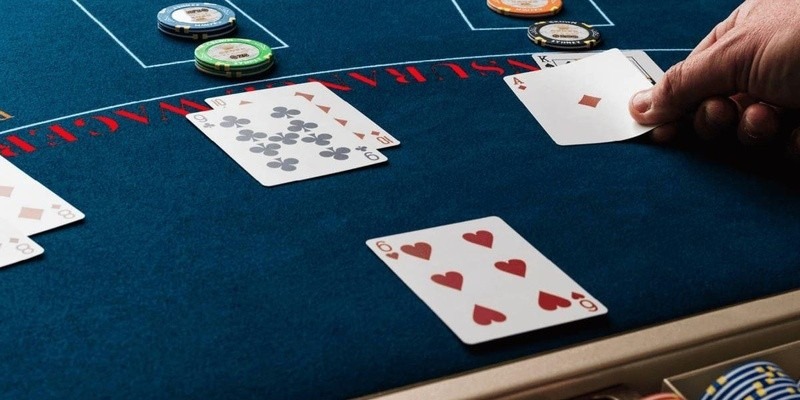
The blackjack basic strategy chart is the only tool in a casino that reliably improves your results, and it works because it removes guessing entirely. Every possible hand you can be dealt has one mathematically correct response, and the chart tells you what it is. This guide covers how to read the grid, the decisions it governs, and how to actually use it during a session at Luck8 without slowing yourself down.
What the blackjack basic strategy chart actually does
At Luck8, The chart is not a system or a trick. It is the output of running every hand combination through millions of simulations and recording which action produced the best average return.
Grid layout of a blackjack basic strategy chart
Where the chart comes from
Computers have played out every possible blackjack scenario countless times. For each combination of your hand and the dealer’s visible card, one action returns more money than the alternatives over the long run.
Those results are compiled into a grid. There is no judgement involved and no room for interpretation. When the blackjack basic strategy chart says stand on 16 against a dealer 6, that is not advice, it is the measured outcome of testing that exact situation repeatedly.
The house edge it removes
Play blackjack on instinct and you are typically facing a house edge somewhere between 2% and 4%, depending on how loose your decisions get. Follow the chart correctly and that drops below 0.5% on standard rules.
That difference is enormous over volume. On 10,000,000 wagered, a 3% edge costs you 300,000 while a 0.5% edge costs 50,000. Nothing else available to a recreational player produces a change of that scale, which is why the chart is treated as mandatory rather than optional.
Reading the grid correctly
The columns across the top represent the dealer’s face up card, running from 2 through Ace. The rows down the side represent your hand total.
Find your row, find the dealer’s column, and the cell where they meet gives your action. Letters mark each option: H for hit, S for stand, D for double, P for split. Separate sections cover hard totals, soft totals containing an Ace counted as 11, and pairs. Using the wrong section is the most common error people make with a blackjack basic strategy chart, so check which one applies before reading the cell.
Core decisions in the blackjack basic strategy chart
Four actions cover everything the chart tells you to do. Understanding the reasoning behind each makes the grid far easier to remember.
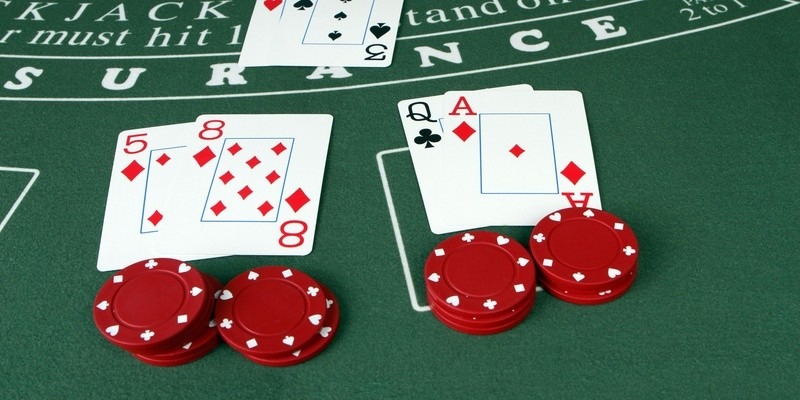
Key decisions in a blackjack basic strategy chart
Hit and stand
This is the decision you face most often and the one where instinct fails hardest. The chart’s guidance depends heavily on whether the dealer is showing a weak or strong card.
Against a dealer 4, 5, or 6, you stand on totals of 12 or higher. Those cards give the dealer the highest bust rate, so you let them take the risk. Against a dealer 7 through Ace, you hit until you reach 17, because the dealer is likely to make a strong hand and a total of 15 will not beat it.
Double down conditions
Doubling lets you increase your bet after seeing your first two cards, in exchange for taking exactly one more card and then stopping.
The chart calls for it when you hold a total of 10 or 11 against a weak dealer card, and on certain soft hands like Ace 6 against a dealer 5. These are the spots where your expected return justifies putting more money in. Doubling on 9 against a dealer 3 feels aggressive but the blackjack basic strategy chart supports it because the numbers do.
Splitting pairs
Two rules never change. Always split Aces and always split Eights. Aces give you two chances at a strong hand, and a total of 16 is the worst hand in blackjack so breaking it apart is always better.
Two rules also never change in the opposite direction. Never split Tens, because 20 is already an excellent hand. Never split Fives, because a total of 10 is a doubling opportunity you would be throwing away.
When to surrender
Not every table offers surrender, but where it exists you forfeit half your stake and end the hand immediately.
The chart recommends it on a hard 16 against a dealer 9, 10, or Ace, and on a hard 15 against a dealer 10. These hands lose so often that giving up half beats playing them out. Check whether the tables at Luck8 offer this option before relying on it.
Using the blackjack basic strategy chart during real sessions
Knowing the chart and using it under pressure are different things. These habits close that gap.
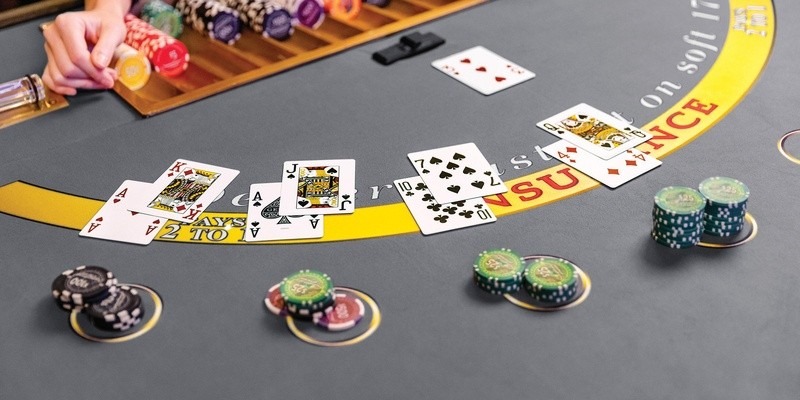
Using a blackjack basic strategy chart in play
- Keep the chart open in a second window or on paper beside you, since consulting it takes 2 seconds and online tables allow ample decision time.
- Follow it on every hand without exception, because the value comes from consistency and one intuition based deviation undoes several correct plays.
- Ignore what happened on previous hands, as the chart accounts for probability and a losing streak does not change what the correct action is now.
- Play at least 200 hands before evaluating whether it works, since short samples are dominated by variance rather than by decision quality.
- Check the table rules first, because the number of decks and whether the dealer hits soft 17 both affect which chart version applies.
- Treat the chart as the foundation and nothing more, as it reduces the house edge but does not eliminate it or make you a favourite.
That second point is where most players lose the benefit. Standing on 16 against a dealer 10 feels wrong every single time, and hitting feels like doing something. The blackjack basic strategy chart accounts for exactly that discomfort, and the moment you start overriding it on the hands that feel worst, you are back to a 3% edge without noticing. Memorising the chart takes a few sessions, and the blackjack tables at Luck8 give you enough time per decision to reference it comfortably while you learn.
Conclusion
Blackjack basic strategy chart use is the single highest value habit available in a casino, taking the house edge from around 3% down below 0.5%. Read the dealer’s card across the top, your total down the side, and use the correct section for hard totals, soft totals, or pairs. Always split Aces and Eights, never split Tens or Fives, and stand on 12 or higher when the dealer shows 4, 5, or 6. bắn cá luck8, including the ones where it feels wrong, because those are the hands it was built for.
