

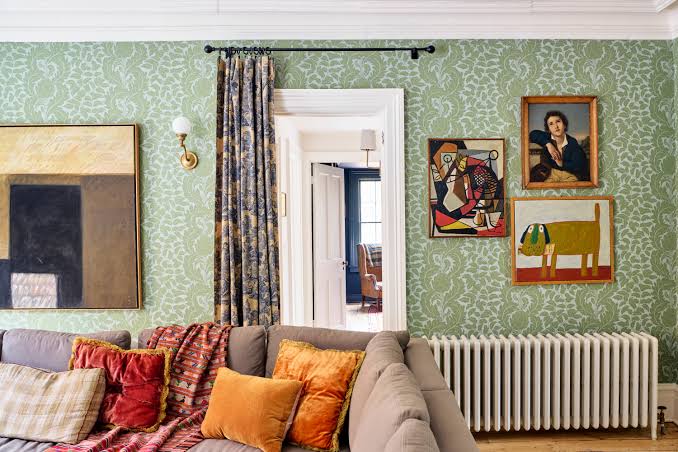
Most people try to make their home feel like fall by changing color first: swapping in orange throw pillows, hanging a wreath, calling it done. Color helps, but it’s not what actually makes a room feel warm. Texture is. A room full of smooth, cool surfaces reads as sterile no matter what shade of amber you paint the walls, while a room with the right mix of rough, soft, and worn materials feels inviting even in beige. If you’ve ever walked into a space and immediately wanted to sit down and stay a while, texture is usually doing more of that work than you’d think.
Start With What’s Already Warm
Before buying anything, walk through your home and note which materials already feel warm to the touch: wood, wool, worn leather, linen that’s been washed enough to go soft. These are your anchors. The goal isn’t to replace what you own, it’s to notice what’s already working and build around it. Most homes have more of this than people realize, tucked into closets or stored for “someday,” and pulling a few of those pieces back into rotation is often the fastest, cheapest fix available to you this week.
If your space leans heavily toward glass, metal, and smooth painted surfaces, that’s not a problem to solve all at once. Pick one room, usually the one you spend the most evening time in, and start there. Trying to texture-layer an entire home in a weekend tends to produce a space that feels staged rather than lived in, which is the opposite of what you’re going for.
Layer From the Ground Up
Rugs are the easiest texture upgrade because they cover the most visual area for the least effort. A flat, low-pile rug does very little for a room’s warmth. Something with more depth, a chunky weave, a bit of shag, even a vintage rug with visible wear, immediately adds richness underfoot and to the eye. If a full rug replacement isn’t in the budget, a smaller layered rug on top of an existing one changes the whole feel of a corner for the cost of one item.
Once the floor is handled, move up to seating. Blankets thrown over the arm of a sofa or draped across the back of a chair do double duty: they look intentional and they’re actually useful once the temperature drops. Mix a chunky knit with something smoother, like a waffle-weave throw, so your eye has more than one texture to land on. A single blanket looks like an accessory. Two or three different ones, casually arranged, look like a home that’s actually settled in for the season.
Pillows Are Not Just for Color Anymore
It’s tempting to buy pillows purely by color when decorating for fall, reaching for anything orange or burgundy and calling it a day. Texture matters more than shade here. A boucle pillow next to a linen one next to something with a subtle woven pattern creates far more visual interest than three pillows in slightly different shades of the same smooth fabric. Vary the sizes too. A row of identical square pillows looks like a hotel display; a mix of shapes and textures looks like someone actually lives there and chose each piece.
Don’t feel obligated to buy new pillow covers every season either. Rotating in a few textured options while keeping others in storage is both more sustainable and, frankly, more interesting than a full seasonal overhaul. A wardrobe of pillow covers you can swap in and out over the years earns its keep far better than a one-time purchase that gets tossed after a single autumn.
Don’t Forget the Walls and Windows
Curtains get overlooked in a lot of texture conversations, but heavier, textured drapery does a lot of quiet work. Swapping a light linen curtain for something with more weight and body, even temporarily, changes how a room sounds as much as how it looks. Heavier fabric muffles noise slightly and blocks a bit more of the cooling evening light, both of which contribute to that closed-in, cozy feeling people associate with fall.
On walls, texture doesn’t have to mean a renovation. A woven wall hanging, a piece of reclaimed wood, even a gallery of framed textiles instead of flat prints adds dimension without requiring tools or a weekend project. If you rent and can’t hang much, leaning a large textured item against the wall, rather than mounting it, still adds the same visual depth without a single nail hole.
Mix Natural Materials With Intention
Wood, wicker, and stone are the trio that reads as autumn almost automatically, and a home leaning on the fall aesthetic usually has at least two of the three somewhere visible. A wooden bowl on the coffee table, a wicker basket for extra blankets, a stone coaster under a mug. None of these need to be new or expensive. Secondhand shops are full of exactly this kind of material, often at a fraction of retail price, and the slight imperfections of a used piece usually add character rather than detract from it.
The key is restraint. Three natural-material accents in a room read as considered. Ten start to feel like a theme park version of a cabin. Pick your favorites, place them where you’ll actually notice them, and resist the urge to fill every open surface just because you found a good deal on wicker baskets.
Let Lighting Do Its Part
Texture and light work together more than most people realize. Warm, low lighting makes every texture in a room look richer, while harsh overhead light flattens everything, no matter how many blankets you’ve layered on. Swap a few bulbs for a warmer color temperature, add a lamp or two at a lower height than your ceiling fixture, and watch how much more dimension your existing textures suddenly have. This one change often makes people feel like they’ve redecorated when really they’ve just adjusted the lighting.
The seasonal home guides on WellnessZing make a similar point: a lot of the “cozy home” transformations people admire online are really good lighting choices dressed up in texture. The exact same room with warmer bulbs and a dimmer switch looks like a completely different season than it does under fluorescent light, even with identical furniture.
Build a Rotation, Not a Renovation
The homes that feel effortlessly seasonal usually aren’t the result of one big shopping trip. They’re built from a small rotating collection of textures that gets pulled out, rearranged, and swapped each year: a few throws, a couple of rugs, some pillow covers, a handful of natural-material accents. Treat this as an ongoing collection rather than a one-time project, and you’ll find that by the third or fourth fall, you already own everything you need. You’re just deciding how to arrange it.
Start small. Pick one room, add two or three textures you’re missing, and live with it for a week before deciding what else the space needs. Layering is, by definition, a slow process, and rushing it tends to produce a room that looks decorated rather than one that actually feels warm to sit in on a cold evening.
