

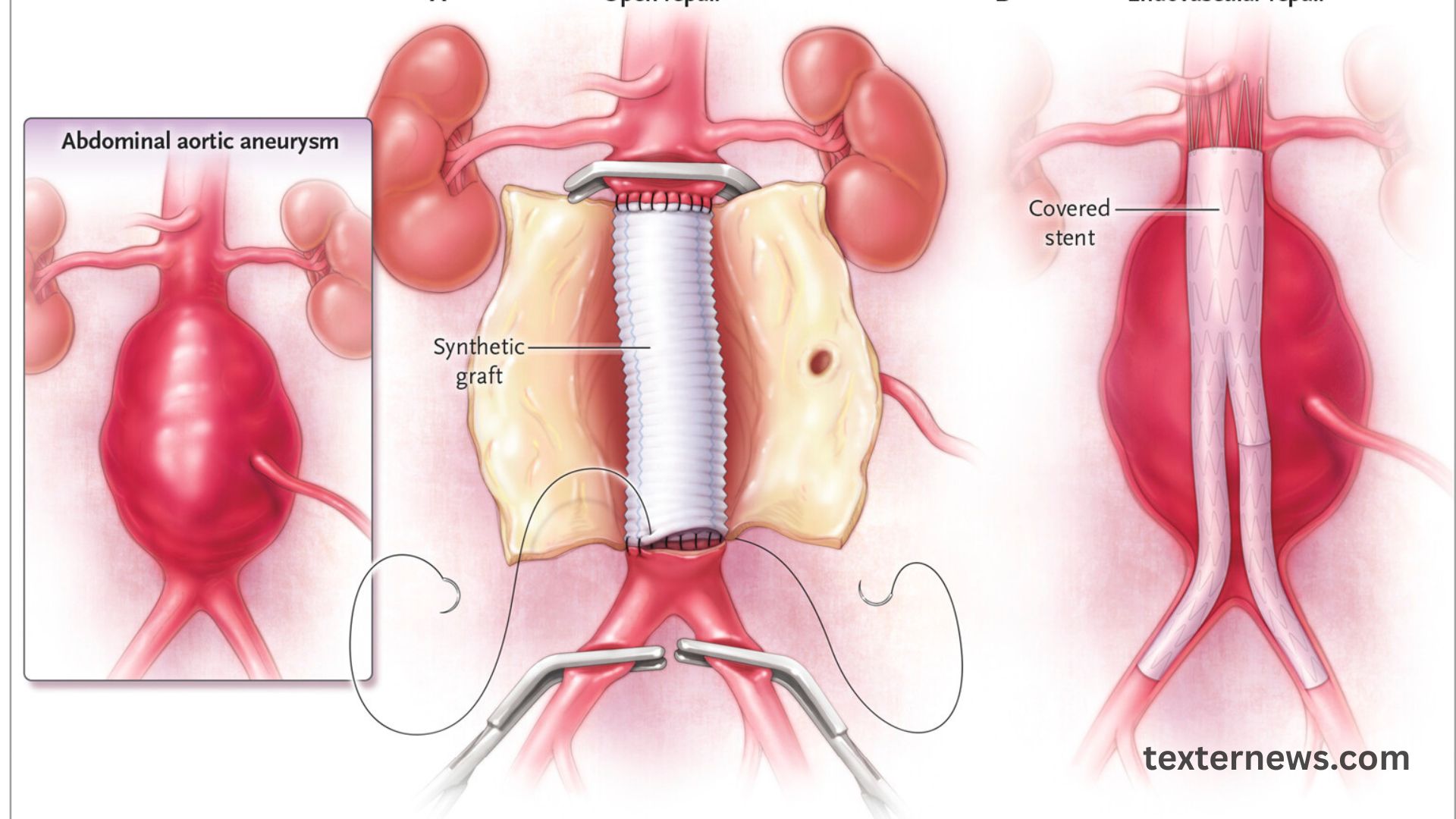
Abdominal aortic aneurysm is a serious vascular condition characterized by abnormal dilation of the aorta, most commonly occurring below the renal arteries. When the aneurysm becomes large, the risk of rupture increases significantly, posing a life-threatening emergency. Advances in vascular surgery have introduced less invasive treatment options, such as endovascular aneurysm repair, which offer improved outcomes compared to traditional open surgery.
This case report describes a giant infrarenal abdominal aortic aneurysm successfully treated with elective endovascular repair using a bifurcated device. The case highlights the importance of early diagnosis, careful imaging evaluation, and timely intervention. It also demonstrates how modern endovascular techniques can effectively manage complex vascular conditions with reduced morbidity and faster recovery, emphasizing their growing role in contemporary surgical practice.
Background and Clinical Significance
Abdominal aortic aneurysms develop due to weakening of the aortic wall, often associated with risk factors such as advanced age, smoking, hypertension, and atherosclerosis. Infrarenal aneurysms are the most common type and are often asymptomatic until they reach a critical size or rupture.
A giant aneurysm is typically defined as one exceeding 10 centimeters in diameter. Such cases are rare but carry a significantly higher risk of rupture and mortality. Early detection through imaging studies such as ultrasound or computed tomography is essential for planning appropriate management. The development of endovascular techniques has transformed treatment strategies, offering minimally invasive alternatives to open surgical repair.
Case Presentation
A male patient in his late sixties presented with vague abdominal discomfort and a pulsatile abdominal mass. He had a history of hypertension and long-term smoking but no prior vascular interventions. Physical examination revealed a prominent pulsation in the abdominal region, raising suspicion for an abdominal aortic aneurysm.
Initial laboratory investigations were unremarkable, with no evidence of infection or significant metabolic abnormalities. Despite the absence of severe symptoms, the clinical findings warranted further imaging to assess the size and extent of the suspected aneurysm.
Diagnostic Imaging and Findings
Computed tomography angiography was performed, revealing a giant infrarenal abdominal aortic aneurysm measuring over 10 centimeters in diameter. The aneurysm extended from below the renal arteries to the aortic bifurcation, with involvement of the iliac arteries.
The imaging also showed preserved blood flow and no signs of rupture, making the patient a candidate for elective intervention. Detailed anatomical assessment confirmed that the aneurysm’s morphology was suitable for endovascular repair using a bifurcated stent graft device.
Treatment Planning and Decision-Making
Given the size of the aneurysm and the associated risk of rupture, prompt intervention was ضروری. The choice between open surgical repair and endovascular aneurysm repair was carefully considered.
Endovascular repair was selected due to its minimally invasive nature, lower perioperative risk, and faster recovery time. The patient’s anatomy was favorable for this approach, allowing for precise placement of the stent graft. The use of a bifurcated device enabled effective exclusion of the aneurysm while maintaining blood flow to the iliac arteries.
Endovascular Procedure
The procedure was performed under general anesthesia in a hybrid operating room. Access was obtained through the femoral arteries, and guidewires were advanced under fluoroscopic guidance.
A bifurcated stent graft device was carefully positioned within the aorta, extending into the iliac arteries. Once deployed, the device created a new pathway for blood flow, effectively isolating the aneurysm sac.
Intraoperative imaging confirmed proper placement and absence of endoleaks. The procedure was completed without complications, demonstrating the precision and effectiveness of modern endovascular techniques.
Postoperative Course and Recovery
The patient’s postoperative recovery was smooth, with minimal pain and no significant complications. He was monitored in the hospital for a short period before being discharged in stable condition.
Follow-up imaging confirmed successful exclusion of the aneurysm and proper function of the stent graft. The patient reported significant improvement in symptoms and returned to normal activities within a few weeks.
Advantages of Endovascular Repair
Endovascular aneurysm repair offers several advantages over traditional open surgery. It involves smaller incisions, reduced blood loss, and shorter hospital stays. Patients typically experience faster recovery and lower complication rates.
The use of advanced devices, such as bifurcated stent grafts, allows for precise treatment of complex aneurysms. These innovations have expanded the range of patients eligible for minimally invasive procedures, improving overall outcomes.
Read More: Life-Threatening Internal Hernia With Closed-Loop Obstruction Case
Challenges and Limitations
Despite its benefits, endovascular repair has limitations. Not all patients are suitable candidates, particularly those with unfavorable anatomy or extensive vascular disease.
Long-term follow-up is essential to monitor for complications such as endoleaks, graft migration, or device failure. Regular imaging ensures early detection and management of these issues.
Clinical Implications and Future Directions
This case highlights the importance of early detection and intervention in managing abdominal aortic aneurysms. Advances in imaging and device technology continue to improve the safety and effectiveness of endovascular repair.
Future developments may include enhanced stent graft designs, improved imaging techniques, and personalized treatment approaches. These innovations will further refine patient selection and optimize outcomes.
FAQs (Frequently Asked Questions)
What is an abdominal aortic aneurysm?
It is a bulging or dilation of the aorta in the abdominal region.
What is considered a giant aneurysm?
An aneurysm larger than 10 cm is typically classified as giant.
What is endovascular aneurysm repair?
A minimally invasive procedure using stent grafts to treat aneurysms.
Who is a candidate for EVAR?
Patients with suitable vascular anatomy and lower surgical risk.
What are the benefits of EVAR?
Less invasive, faster recovery, and lower complication rates.
Are there risks with EVAR?
Yes, including endoleaks, graft movement, and need for follow-up.
How is an aneurysm diagnosed?
Through imaging techniques like ultrasound or CT scans.
Can patients recover fully after treatment?
Yes, most patients recover well with proper follow-up care.
Conclusion:
This case demonstrates the successful management of a giant infrarenal abdominal aortic aneurysm using elective endovascular repair with a bifurcated device. Early diagnosis, careful planning, and advanced surgical techniques were key to achieving a favorable outcome. Endovascular repair offers a safe and effective alternative to open surgery, particularly for high-risk patients. Continued advancements in technology and clinical practice will further enhance the management of complex vascular conditions and improve patient care.
