

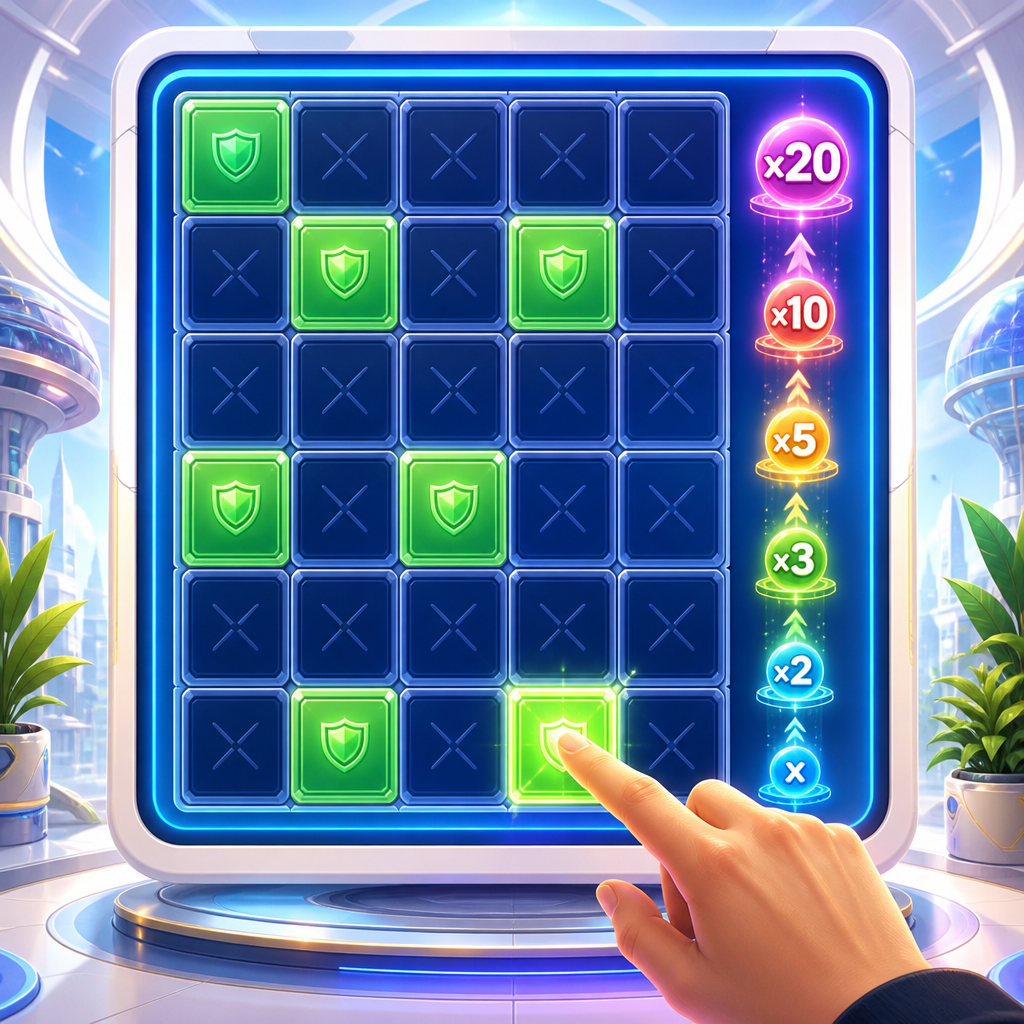
Mission Uncrossable has quickly become a favorite for players who enjoy fast decisions, simple rules, and the thrill of watching multipliers climb. It can look complex at first glance, yet the structure is surprisingly straightforward once the basic mechanics are clear. This guide walks through the rules, how multipliers work, and the core strategies that help players approach each round with clarity.
Core idea behind Mission Uncrossable
At its heart, Mission Uncrossable is a grid based game where players select positions that may or may not trigger a multiplier. Every round starts with a clean layout, and the goal is to keep uncovering winning positions without hitting the losing marker that ends the round. The experience feels like a mix of a traditional board game and modern instant play mechanics, built around simple but tense choices.
Basic rules step by step
A typical round begins with the player choosing a stake and confirming the start. A fresh grid appears with a hidden pattern of safe and losing positions. The player then selects one position at a time. A safe selection reveals a symbol or value and increases the potential payout. Hitting the losing position ends the round immediately and the stake for that round is lost.
After each safe reveal, players normally have a choice to continue or to cash out the current return. Cashing out locks in the amount based on the current multiplier. Continuing means chasing a higher multiplier with one more selection. This simple loop of choose, reveal, then decide again is what gives mission uncrossable its pace and appeal for strategic thinkers.
How the multiplier structure works
The multiplier is the engine of the game. Each safe selection usually increases the payout factor applied to the original stake. Early picks tend to offer modest increases, while later selections can push the multiplier to much higher ranges. The exact scaling varies by version, but the pattern is almost always progressive. The further a player goes without triggering a losing position, the more dramatic the potential return becomes.
Importantly, the multiplier is not guaranteed. It only converts to real winnings when the player chooses to cash out or successfully completes all available safe positions. This means every new choice is essentially a trade off between locking in a confirmed return at a lower multiplier or aiming for a larger payout by uncovering more of the grid.
Understanding odds and house edge
Mission Uncrossable is built on predefined probabilities. Each grid contains a fixed number of losing positions and safe positions, set by the rules of the variant in use. The odds of surviving each new selection can be thought of as the number of remaining safe positions divided by the total remaining positions. With each reveal, that ratio changes, which is why some rounds feel wide open while others quickly tighten.
The game also has a house edge, which ensures the operator maintains a long term advantage. This edge is baked into the payout table behind the multipliers. Even when generous multipliers appear, the combined effect of winning and losing outcomes across many rounds is designed so that the expected return to players stays below 100 percent. Understanding that structure helps players see big wins as high points in a long sequence of mathematically balanced rounds.
Strategy basics for smarter decisions
Because of its design, Mission Uncrossable tends to reward structured decision making more than random clicking. One of the most practical approaches is to set a clear objective for each round before starting. For example, some players choose a target multiplier range that feels satisfying and stick to cashing out once it is reached, regardless of how “lucky” the grid seems in the moment.
Another common tactic is to adjust round length. Shorter rounds focus on taking one or two safe picks, then exiting early for modest but frequent returns. Longer rounds aim to ride out more selections in pursuit of high multipliers, which naturally leads to more volatile outcomes. Neither style is inherently better; both can be enjoyable as long as the player stays consistent with the chosen plan rather than reacting impulsively to each reveal.
Bankroll management and session planning
Beyond individual rounds, many experienced players treat Mission Uncrossable as a series of sessions rather than isolated bets. A typical approach is to set a session budget and break it into a fixed number of rounds. This keeps stake sizes steady and helps avoid chasing previous outcomes. Some players also decide in advance how they will respond to a particularly good run, such as locking away a portion of any larger return and continuing with the original stake size.
Because regulations vary, players in the United States and other regions should always check local laws to confirm where and how this type of game is offered before planning longer sessions. Legal frameworks influence which versions are available and how payout structures are presented.
Psychology, pacing and enjoyment
Mission Uncrossable has a distinctive rhythm. The combination of quick choices and mounting multipliers can feel intense, especially when several safe picks occur in a row. Recognizing that emotional swing is part of playing well. Many seasoned players build short breaks into their sessions, giving themselves a few moments between clusters of rounds to reset their thinking.
It can also help to separate entertainment goals from specific monetary outcomes. Players who focus on the satisfaction of applying a plan, analyzing patterns, and refining their decision timing often report a more stable experience than those who concentrate solely on hitting the biggest possible multiplier each time. Treating every completed round as feedback for the next one turns the game into an ongoing skill building exercise rather than a series of disconnected events.
Bringing it all together
Mission Uncrossable blends simple mechanics with layered decision making, which is why it resonates with players who enjoy both structure and suspense. Understanding how the grid works, how multipliers grow, and where the house edge sits provides a solid base. Adding clear round objectives, steady bankroll habits, and thoughtful pacing turns that knowledge into practical strategy. With those pieces in place, each session becomes an engaging test of timing, discipline, and personal playing style.
